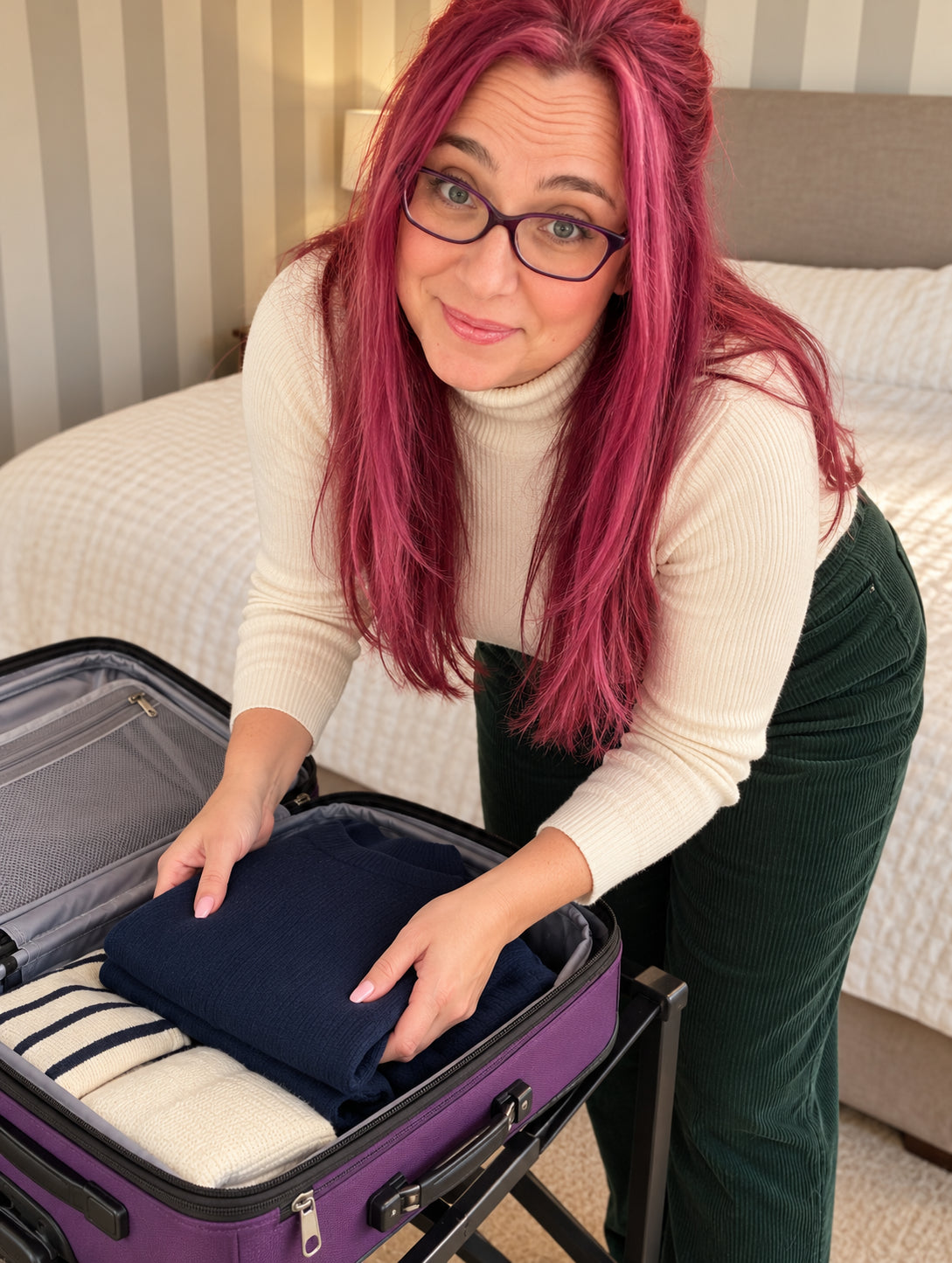
Why Does Packing for a Trip Feel So Overwhelming During Menopause? My Suitcase Needs a Project Manager
Short answer: packing for a trip can feel unusually overwhelming during perimenopause or menopause because it piles planning, memory, decisions, timing, sleep worries, temperature changes, and “what if I forget the one thing I actually need?” into one open suitcase. Brain fog may make organizing and holding several steps in mind feel harder, while fatigue, anxiety, hot flashes, pain, or poor sleep can shrink your available bandwidth even more.
This does not mean you have suddenly forgotten how travel works. It means packing has quietly become a group project—and apparently every member of the group is your own brain wearing a different hat. The fix is not to think harder. It is to move the decisions out of your head and into a simple, repeatable system.
Want candid menopause company in your inbox?
Send me the Daily Chaos for practical midlife notes, honest laughs, and reminders that your suitcase does not need seventeen “just in case” personalities.
Why can menopause make packing feel like a major operation?
Difficulty concentrating, distractibility, forgetfulness, and trouble organizing tasks are commonly reported during the menopause transition. The Menopause Society says 40% to 60% of midlife women report cognitive symptoms such as trouble focusing and remembering. These changes are usually mild, but they can feel very real when one task contains dozens of tiny choices.
Packing also happens before a disruption to your usual routine. You may be trying to predict sleep, food, weather, hot flashes, bathroom access, medications, luggage limits, travel delays, and every possible outfit mood. Add a poor night of sleep or an anxious “don’t forget anything” loop, and even choosing socks can require a board meeting.
If ordinary errands already drain your decision-making battery, read why simple decisions can feel exhausting during menopause. Packing is that same mental load wearing a passport holder.
The three-pass menopause packing method
Pass 1: Pack the non-negotiables first
Start with the items that would be difficult, unsafe, or expensive to replace:
- Identification, passport, tickets, wallet, keys, and phone
- Prescription medications in their original labelled containers
- Copies of prescriptions and important medical information
- Glasses, contacts, hearing devices, mobility aids, or other essentials
- Chargers and any required medical-device supplies
- Travel insurance details and emergency contacts
For international travel, the Government of Canada advises checking whether your medication is legal at your destination and bringing enough to last beyond the intended stay in case of delays. The CDC also recommends keeping medications in a carry-on, not checked luggage. Check destination and airline rules before you leave.
Pass 2: Build outfits, not a clothing avalanche
Choose a simple colour palette and lay out complete outfits. Aim for pieces that mix, layer, and feel comfortable on your body today—not the body you think might appear if the moon is in the correct phase and the hotel mirror is kind.
A practical formula is:
- One comfortable travel outfit
- One top per day, adjusted for laundry access
- Two or three bottoms that work with several tops
- One warmer layer and one lightweight layer
- Comfortable shoes appropriate for the planned activities
- Underwear, sleepwear, and one backup outfit in your carry-on
If temperature swings are part of the chaos, use the breathable layering ideas in the best clothes for menopause hot flashes. Clothing can improve comfort, but it is not a treatment for vasomotor symptoms.
Pass 3: Add the comfort extras last
Now add the helpful—not essential—items: a small fan, cooling cloth, earplugs, eye mask, refillable water bottle, easy snack, unscented personal-care items, or a familiar bedtime cue. Give this category a size limit. When the pouch is full, the audition is over.
Make one menopause travel kit
Keep a small repeatable kit so you do not rebuild the whole system before every trip. Depending on your needs and destination, it might include:
- Your regular medications and a few extra doses for delays
- A medication list with generic names and dosing instructions
- A cooling option and removable layer
- Menstrual products or liners if cycles are unpredictable
- Lubricant or vaginal moisturizer if you already use one
- Earplugs, eye mask, or other familiar sleep supports
- A refillable water bottle and oral rehydration supplies when appropriate
- A small first-aid kit suited to the destination
Do not start a new supplement, sleep aid, or symptom remedy simply because you are travelling. Check with a pharmacist or clinician about interactions, destination rules, time-zone dosing, and anything that makes you drowsy. Wellness products do not treat menopause-related cognitive symptoms or mental-health conditions.
A packing checklist that brain fog can actually use
Seven days before
- Check the forecast, itinerary, luggage rules, and destination health advice.
- Refill prescriptions if needed.
- Start one written checklist. Do not create three notes, two screenshots, and a mystery list in your email drafts.
Two days before
- Lay out outfits and remove duplicates.
- Pack non-daily items.
- Place carry-on essentials together.
- Download confirmations and save emergency information offline.
The night before
- Add daily medications and toiletries after using them.
- Fill your water bottle after security, not before.
- Put identification, wallet, and phone in one designated travel bag.
- Set an alarm and stop repacking. The fourth sweater has had enough opportunities.
Before leaving
Use one final check: ID, medication, phone, wallet, keys. Almost everything else can be replaced. If you are repeatedly interrupted while packing, the one-thread method for returning to a task can help you leave a visible restart note instead of beginning again from the socks.
Protect sleep and energy while travelling
Travel can disturb routines even without menopause. When hot flashes, night sweats, urinary symptoms, anxiety, or early waking join the itinerary, sleep may be more fragile. ACOG notes that sleep problems around menopause can include trouble falling asleep, waking often, and waking too early.
Keep your expectations humane. Build in recovery time, avoid scheduling every hour, and bring familiar sleep cues when possible. Stay aware of hydration without chasing an arbitrary target; this simple menopause hydration routine may help if drinking water keeps disappearing from your mental list.
When should packing overwhelm or brain fog be checked?
Talk with a qualified health-care professional if concentration, organization, memory, anxiety, or sleep changes are new, persistent, worsening, or interfering with work, travel safety, driving, medication use, finances, or everyday life. Bring a symptom timeline and an up-to-date medication and supplement list.
Seek urgent medical care for sudden confusion, new difficulty speaking, facial drooping, one-sided weakness or numbness, fainting, chest pain, or a severe unusual headache. Those symptoms are not something to write off as menopause brain fog.
Menopause symptoms affecting your everyday life?
Our free, private menopause symptom check-in can help you identify your biggest struggles and share what matters most. It is a voluntary wellness conversation starter, not a medical diagnosis, and personal follow-up is optional.
Want support that starts with listening? Explore Menopause Support for practical, personalized wellness guidance without claims that products treat cognitive or mental-health conditions.
Sources
- The Menopause Society: Perimenopause—Brain Fog (accessed November 22, 2026)
- American College of Obstetricians and Gynecologists: Menopause Symptom Tracker (updated December 2025)
- American College of Obstetricians and Gynecologists: Sleep Health and Disorders (accessed November 22, 2026)
- Government of Canada: Travel Health Checklist (accessed November 22, 2026)
- Government of Canada: Travel Health Kit Checklist (accessed November 22, 2026)
- CDC Travelers’ Health: Traveling Abroad with Medicine (accessed November 22, 2026)
Medical disclaimer: This article is for general education and is not medical advice, diagnosis, or treatment. Travel requirements and medication rules vary by destination. Discuss new, worsening, persistent, or disruptive symptoms with a qualified health-care professional, and consult a pharmacist or travel clinic about medication timing, interactions, and destination rules.
