ADHD and Forgetting Your Charger: A Work Bag Routine That Actually Sticks
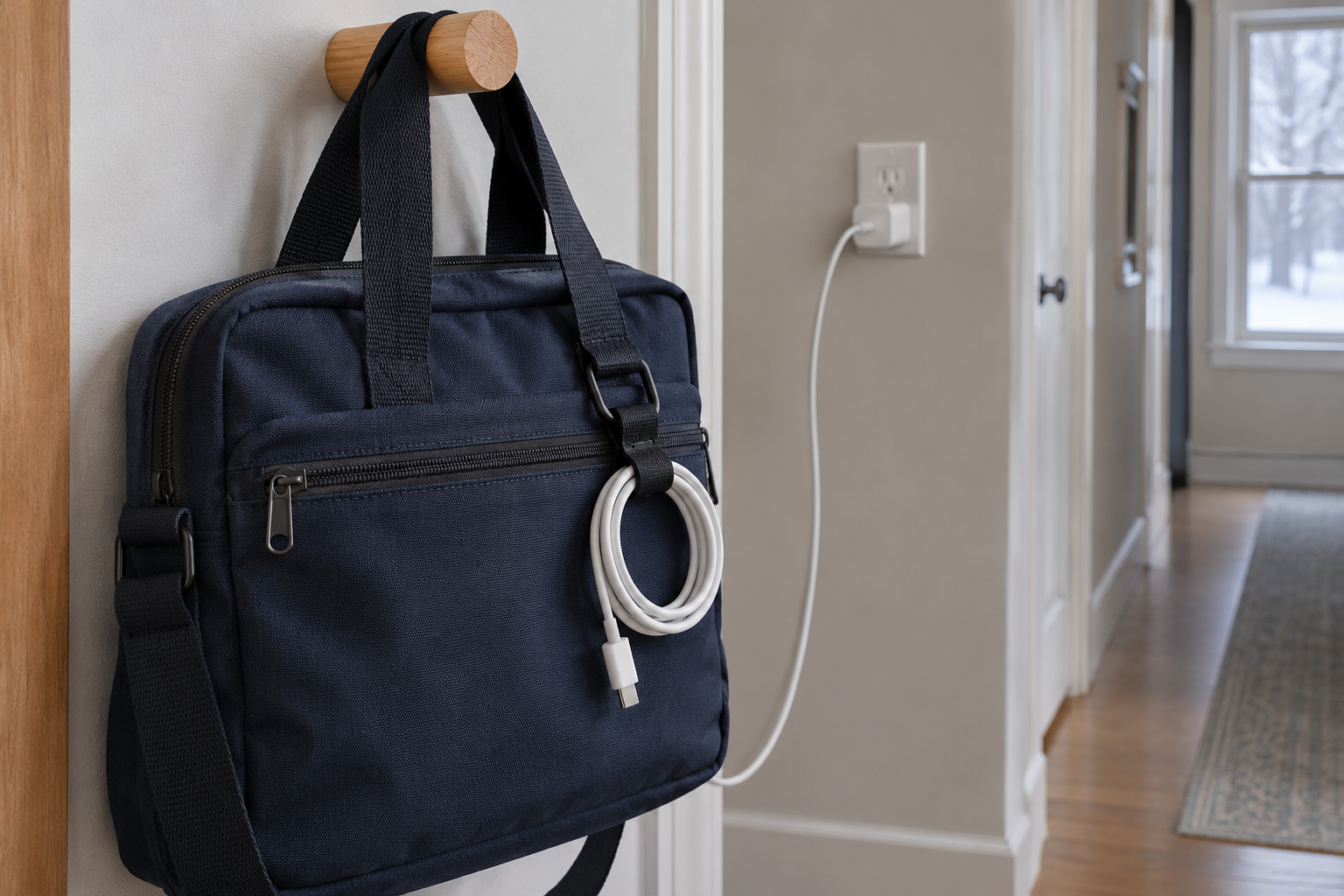
The quick fix: Give your charger one pocket in the bag you use for work. If you take it out at home, leave a visible cue on the bag until it goes back. Check for the cable and the wall adapter before you zip up. The cable alone is a lovely piece of string.
Why do I remember the charger after I leave?
“Bring the charger” sounds like one job. But if it’s plugged in while you’re getting ready, you have to remember to come back to it after doing something else. The National Institute of Mental Health’s guide to adult ADHD describes difficulty remembering daily tasks and staying organized. Forgetting a cable by itself doesn’t indicate ADHD. The useful question is where your routine breaks.
Give it one pocket, even if you only own one charger
Pick an easy-to-reach pocket. At work, put the charger there as soon as you unplug it, before you shut down the rest of your desk. At home, if it has to come out again, clip a bright clothespin to the bag zipper. Take the pin off only when the charger is back. The cue stays with the bag, where the decision happens.
Check at the zipper, not halfway to work
Touch the cable and adapter before closing the bag. If you switch bags, move them both while the bags are side by side. If this happens with more than your charger, start with your two most frequently forgotten items. Nobody needs to conduct a full inventory of their purse every morning.
Fix the repeat failure, not the whole morning
Try the routine for three departures. If the cue gets ignored, move it to a spot you physically handle. If the same charger keeps getting borrowed from the bag and you already have a compatible spare, give each one a home. No spare? Put the bag next to the charging spot so returning the charger takes one step. For another way to make a reminder visible, see why sticky notes stop working.
This article is general education, not medical advice or a diagnosis. If attention or memory difficulties regularly interfere with daily life, a qualified healthcare professional can help you explore support.
